Trip Hazard Sidewalk Repair
Trip Hazard Sidewalk Repair
If your sidewalk has a raised edge, uneven joint, or a sudden step, it’s more than an eyesore — it’s a trip hazard. Across Florida, Georgia, Texas, Tennessee, and Alabama, sidewalks commonly shift due to soil movement, water washout, and freeze-thaw cycles. What starts as a small height difference can quickly turn into a safety concern for homeowners, visitors, customers, and pedestrians.
The good news? Most sidewalk trip hazards can be fixed without tearing out and replacing the concrete. Concrete lifting corrects the problem by restoring support under the slab — where the issue actually starts.
Signs Your Sidewalk Has a Trip Hazard
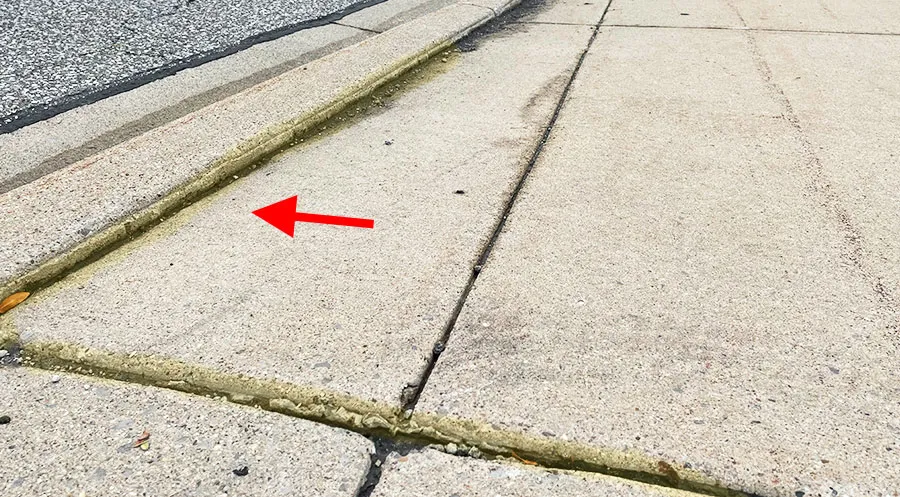
Sidewalk problems often develop slowly, which makes them easy to overlook. Common warning signs include:
- One sidewalk section sitting higher or lower than the next
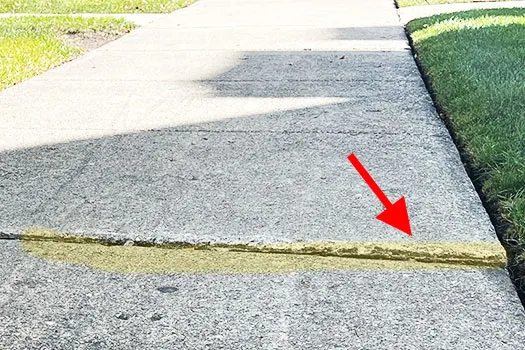
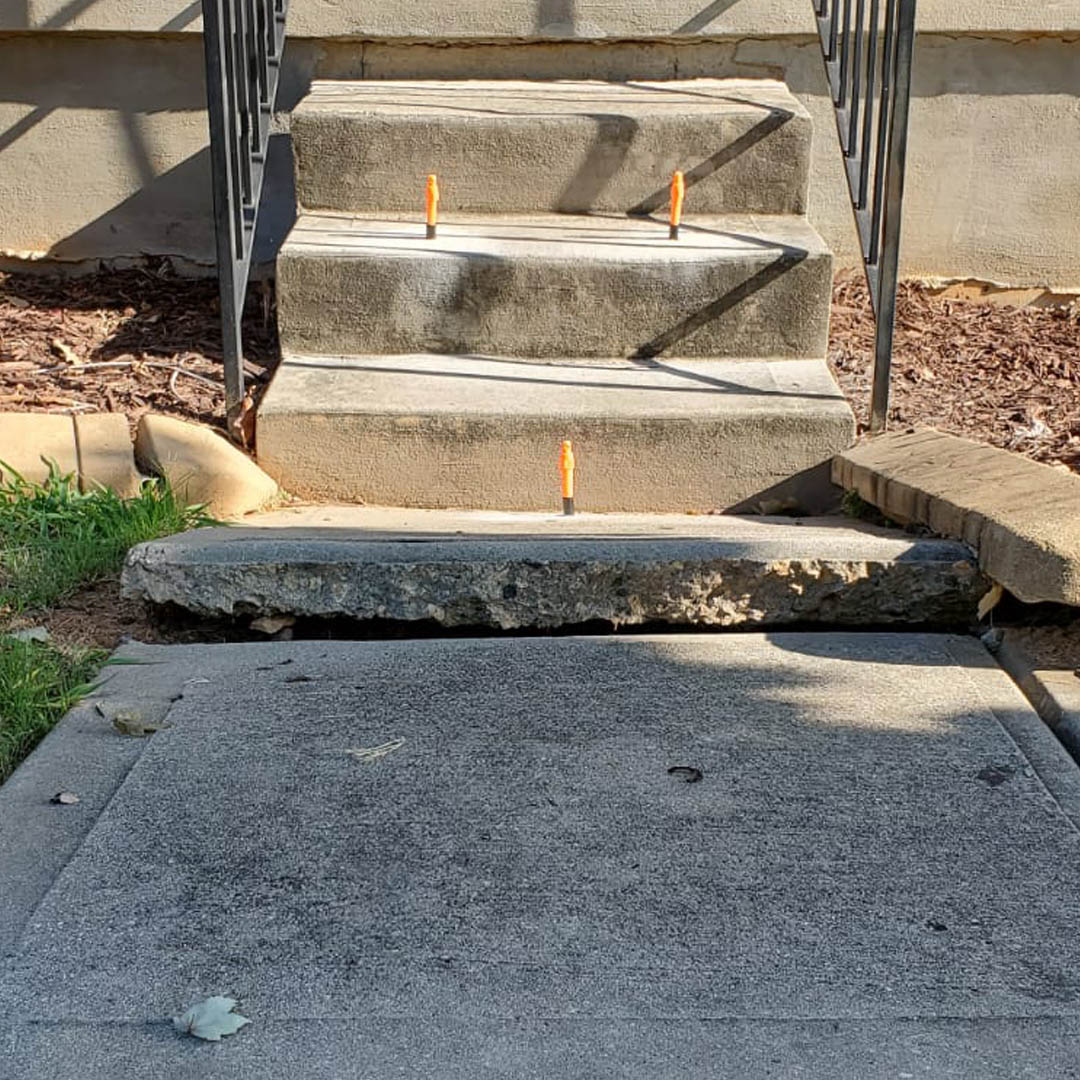
- A noticeable “lip” or step where slabs meet
- Uneven joints that catch your toe or heel
- Cracks forming near edges or corners
- Water pooling along one side of the sidewalk
- A hollow sound when the concrete is tapped
Even small height changes can cause trips, falls, and injuries.
Why Sidewalks Become Uneven
In most cases, the concrete itself isn’t failing — the soil beneath it is. Common causes include:
- Natural soil settlement over time
- Poor compaction during installation
- Water erosion washing soil out from under the slab
- Downspouts or drainage directing water toward the sidewalk
- Freeze-thaw cycles shifting the ground
- Voids forming under sections of concrete
As the ground loses strength, slabs sink, tilt, or separate, creating trip hazards along the walking surface.
Why Fixing Trip Hazards Early Matters
Ignoring an uneven sidewalk can lead to bigger problems.
- Increased risk of trips and falls
- Liability concerns for homeowners, businesses, and HOAs
- Water draining toward foundations or structures
- Continued settlement and worsening misalignment
- Higher repair costs if the issue spreads
Fixing trip hazards early helps protect people, property, and your long-term investment.
Schedule a Free Estimate
The Smarter Solution: Concrete Lifting vs. Replacement
Replacing a sidewalk isn’t always necessary — and often isn’t the best option.
Concrete Lifting
- Raises and levels the existing sidewalk
- Costs less than full replacement in most cases
- No demolition or concrete removal
- Minimal impact to landscaping and nearby areas
- Fills voids and stabilizes the soil below
When Replacement Makes Sense
Replacement may be recommended if:
- The concrete is badly broken or crumbling
- The slab is poorly built or too thin
- Structural damage goes beyond settlement
A proper inspection helps determine the right fix.
How Trip Hazard Sidewalk Repair Works
Concrete lifting uses a controlled, proven process to restore safety.
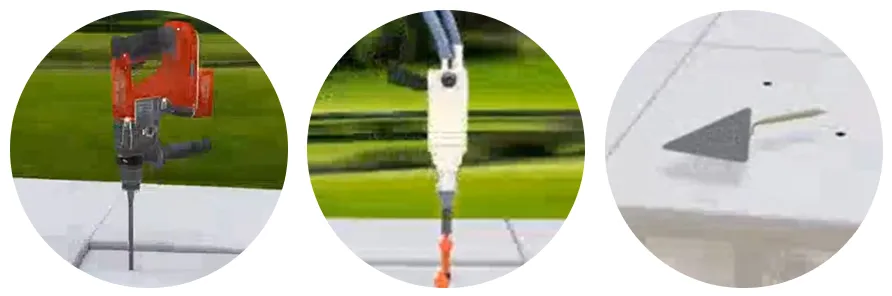
Step 1: Drill
Small access holes are drilled in targeted locations where lifting is needed.
Step 2: Inject
High-density polyurethane foam is injected beneath the slab. The foam expands to fill voids, lift the concrete, and stabilize the soil.
Step 3: Patch
Once the sidewalk is leveled, the holes are patched and the area is cleaned up.
The process is precise, clean, and designed to fix the real problem — not just the surface.
Timeline & Results
Sidewalk lifting is fast and efficient.
- Most trip hazard repairs are completed in a few hours
- No heavy equipment or property damage
- Results are immediate once lifting is complete
- Sidewalks are safer and more even right away
- Drainage often improves after leveling
Why Poly Lift USA & The Benefits of FoamJection


Trip Hazard Sidewalk Repair FAQs
-
Yes. In many cases, concrete lifting raises and levels uneven sidewalk slabs without removing or replacing the concrete. This approach corrects the underlying soil issue and restores safety at a lower cost.
-
Concrete lifting is designed to be a long-term solution. By filling voids and stabilizing the soil, the repair helps prevent continued movement under normal conditions.
-
No repair can eliminate all future soil movement, but lifting and stabilizing the slab greatly reduces the chance of repeat settlement. Proper drainage around the sidewalk also helps protect the repair over time.
-
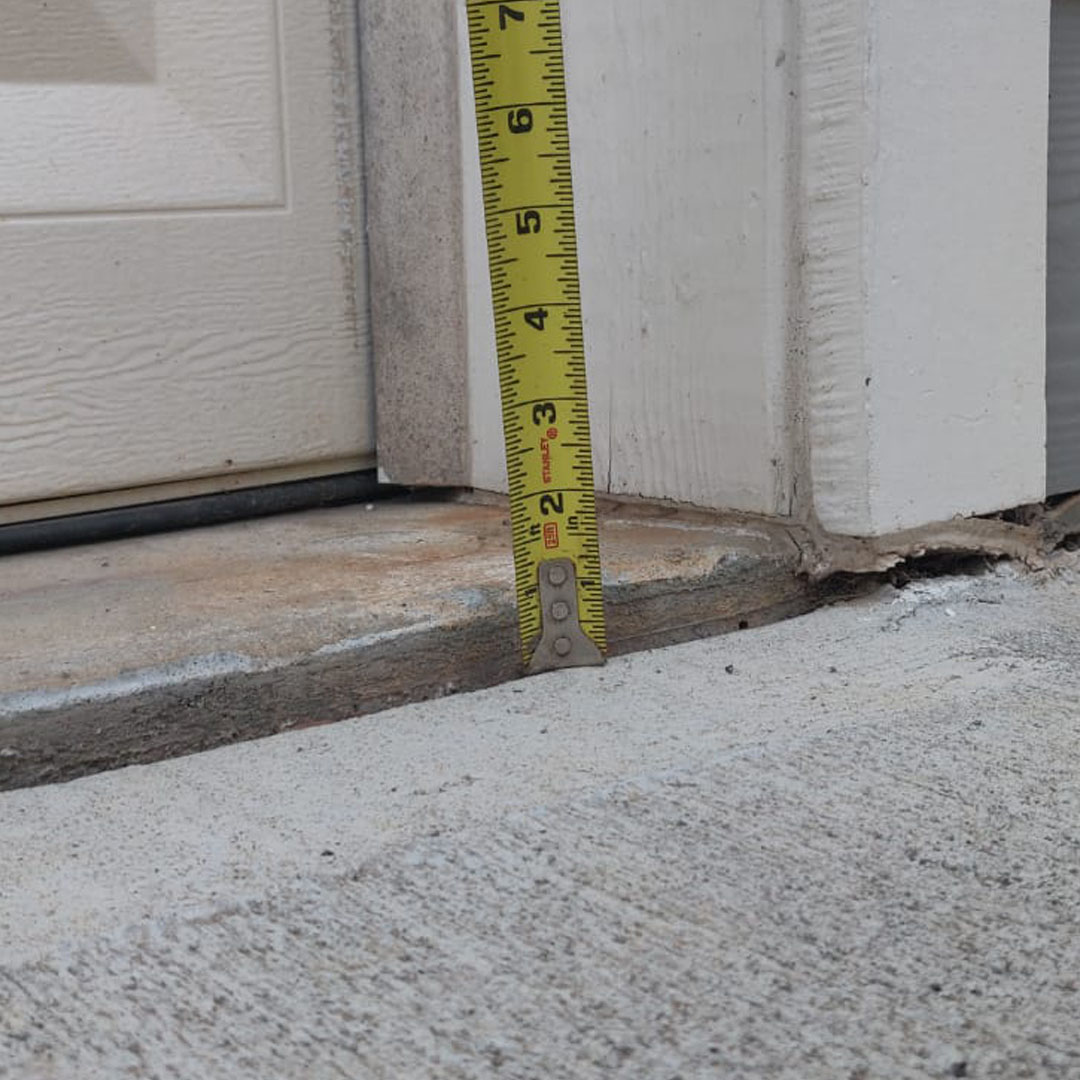
Yes. Even a height difference of ½ inch can catch a toe or heel, especially when someone isn’t looking down. Trip hazards are one of the most common causes of falls on residential and commercial sidewalks. What feels minor can still cause injuries, especially for kids, seniors, or anyone carrying items.
-
They can. Trip hazards increase the risk of falls on your property, which may create liability concerns for homeowners, landlords, HOAs, and businesses. Fixing uneven sidewalk sections helps reduce that risk and shows you’ve taken steps to address a known safety issue.
-
No. Concrete lifting is a non-invasive process. Small holes are drilled in the slab, and the lifting material is injected underneath. There’s no excavation, no heavy equipment, and minimal impact to surrounding grass, plants, or landscaping.
-
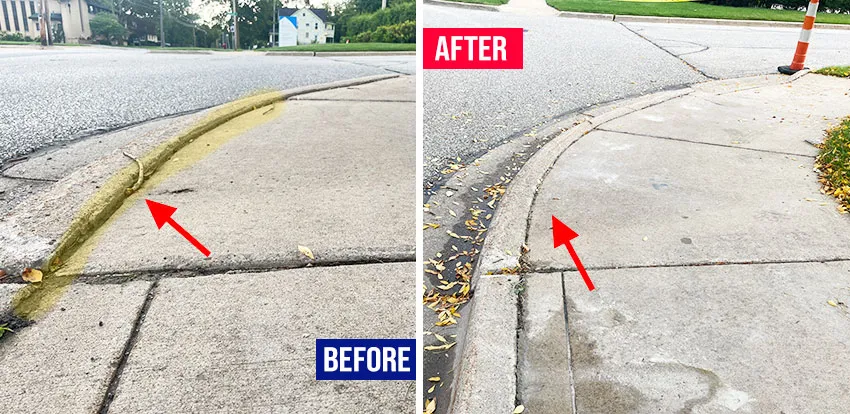
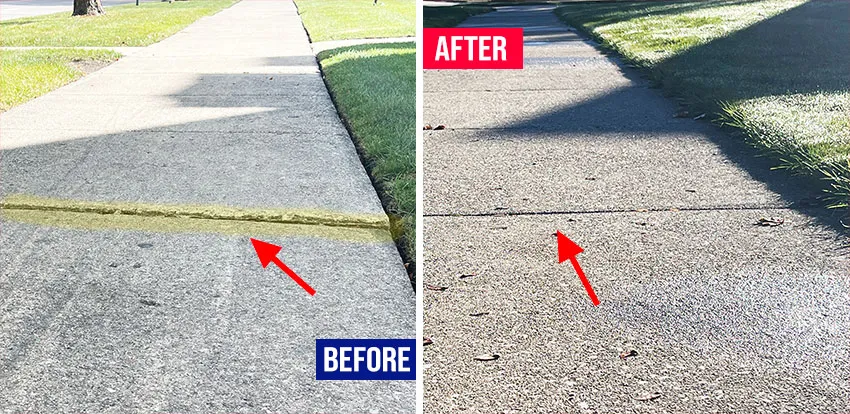
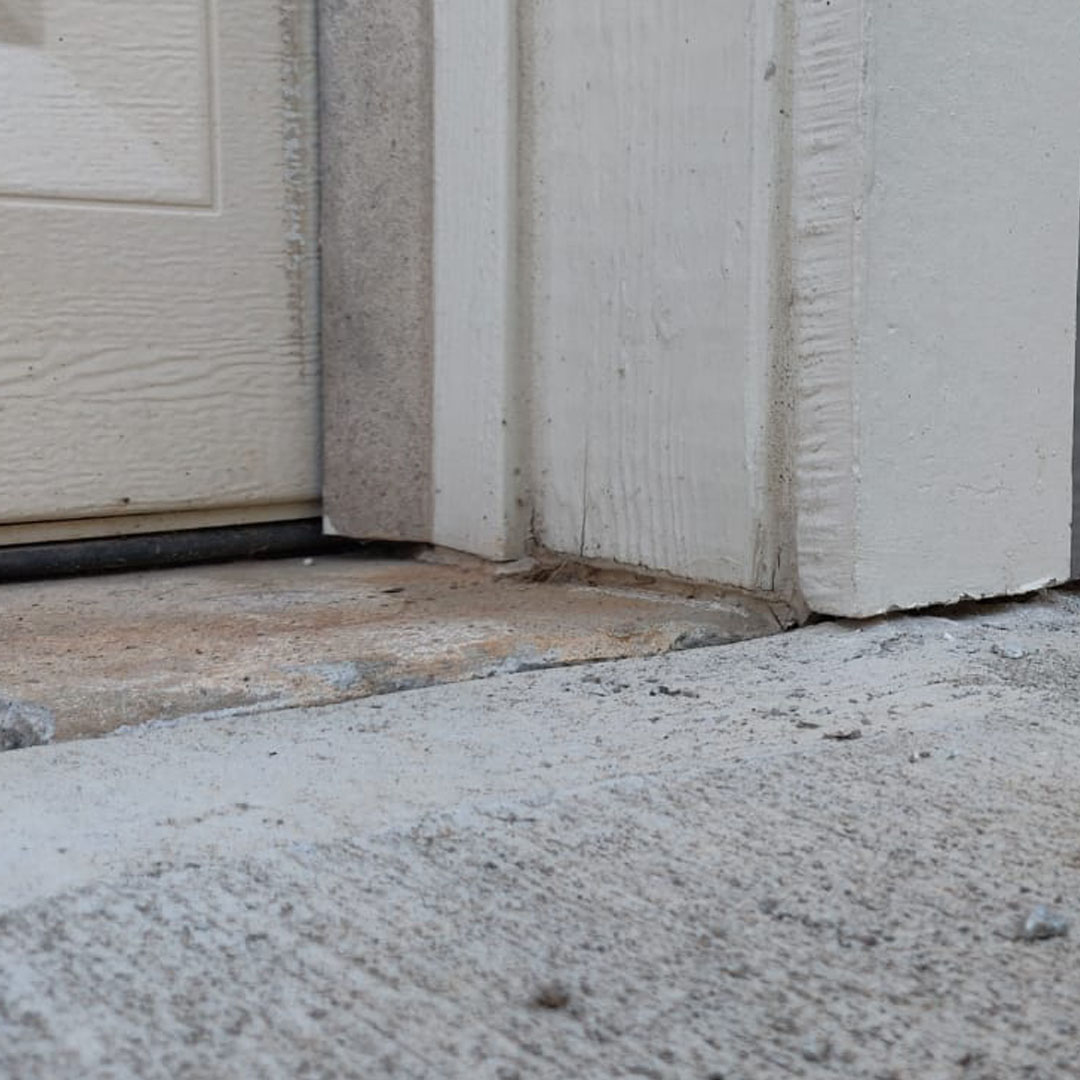
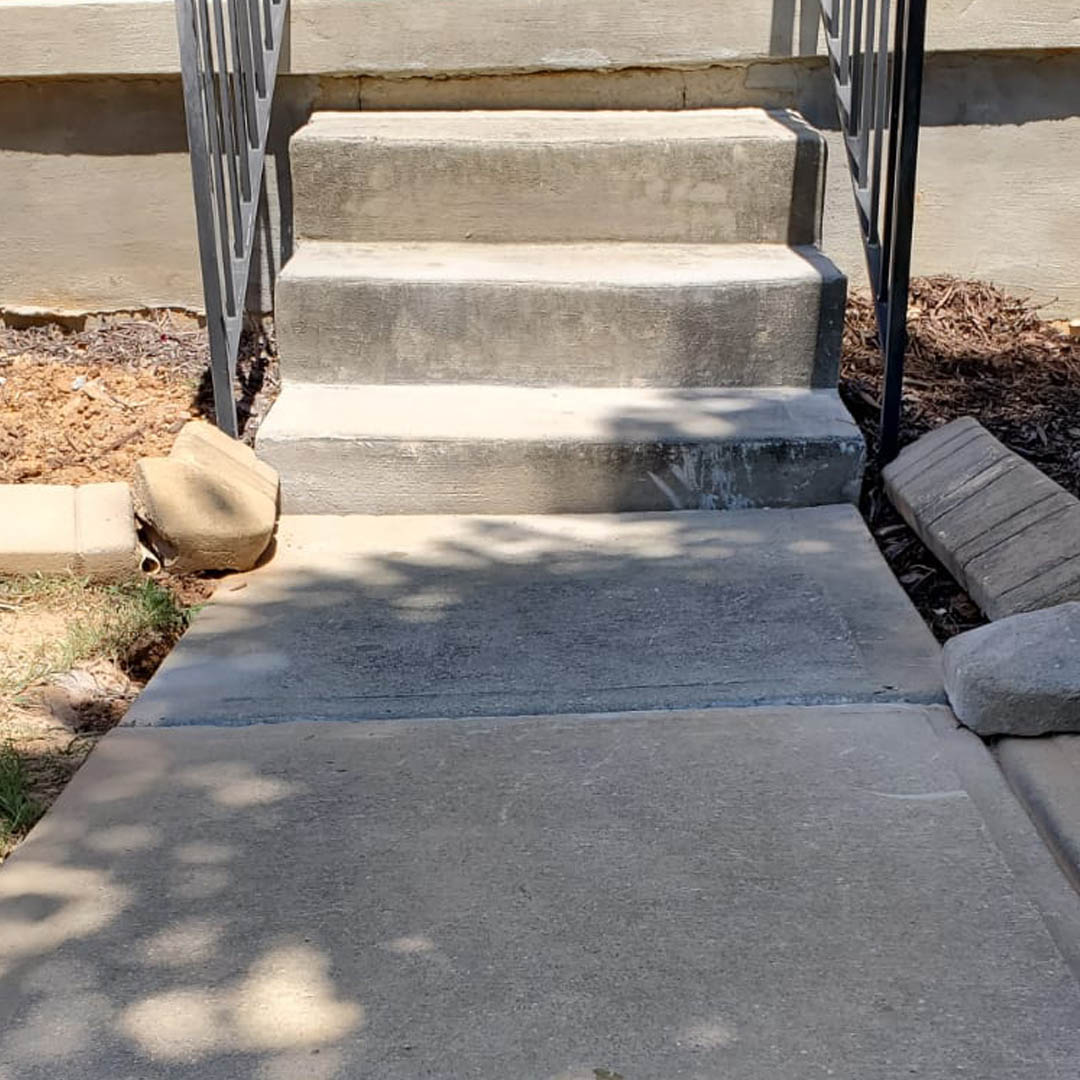
The access holes used during lifting are small and patched after leveling. While you may be able to spot the patched areas up close, most homeowners find them far less noticeable than the trip hazard itself — and far better than replacing the entire sidewalk. View the results below ☟
-
Often, yes. When sidewalk slabs sink or tilt, water tends to collect in low spots. By lifting and re-leveling the concrete, drainage can improve and water is more likely to flow away instead of pooling along the walk.
-
Yes. The repair process is quick and controlled, and most sidewalks are ready for normal use shortly after the work is complete. There’s no open trench, exposed rebar, or extended construction area to worry about.
-
A proper inspection helps determine that. If the concrete is still structurally sound and the problem is caused by soil settlement or voids underneath, lifting is often a great solution. If the slab is badly damaged, replacement may be recommended instead.
Concrete driveways rest on subgrade, which is a fancy term for the earth below. When the subgrade begins to weaken and settle, the driveway loses its support. This can be caused by a variety of factors…weather, rain, leaks, excess weight to name a few. While the root causes may vary, the end result is always the same. Structural damage.
Over time, often in months, driveway slabs begin to stress, then crack and, eventually, break apart and sink. This leads to trip hazards, unsightly appearance and a reduction in property values. This damage is structural – not cosmetic. Neither patching nor a new surface will solve the problem.
At Poly Lift USA we offer customers an environmentally safe, affordable, long-term resolution.
Our Foamjection technology has enabled thousands of property owners in Florida, Georgia, Texas and Alabama to repair their damaged driveway and save thousands in replacement costs. Our typical repair is well under 50% less than cost of replacement.
Here’s how Foamjection technology works:
- Penny size holes are drilled through the damaged slab at 5-foot intervals.
- Specially formulated polyurethane foam is pumped through the slab reaching the subgrade underneath.
- The liquid foam fills voids and expands rapidly to compact the earth beneath the slab.
- As the foam hardens it locks the slab in place. We call this stabilization.
- When lift is required, additional foam is pumped using carefully calibrated pressure gauges until the slab is raised to the desired height.
- Drill holes are filled with sanded concrete.
All Poly Lift USA repairs come with a 10-year, transferable warranty.
If you live in Florida, Georgia or Texas and your driveway or parking area is starting to crack, settle or sink, please call Poly Lift today! (844-765-9872). See why 10,000 clients have repaired, instead of replaced their damaged driveway with Poly Lift USA.
We understand how important it is to secure your property investment and protect your family.
Please don’t wait for your driveway to become so damaged that repair is not possible. If cracked pieces become too fragmented (less than 3 feet square) repair will no longer be an option. (844-765-9872)

How It Works
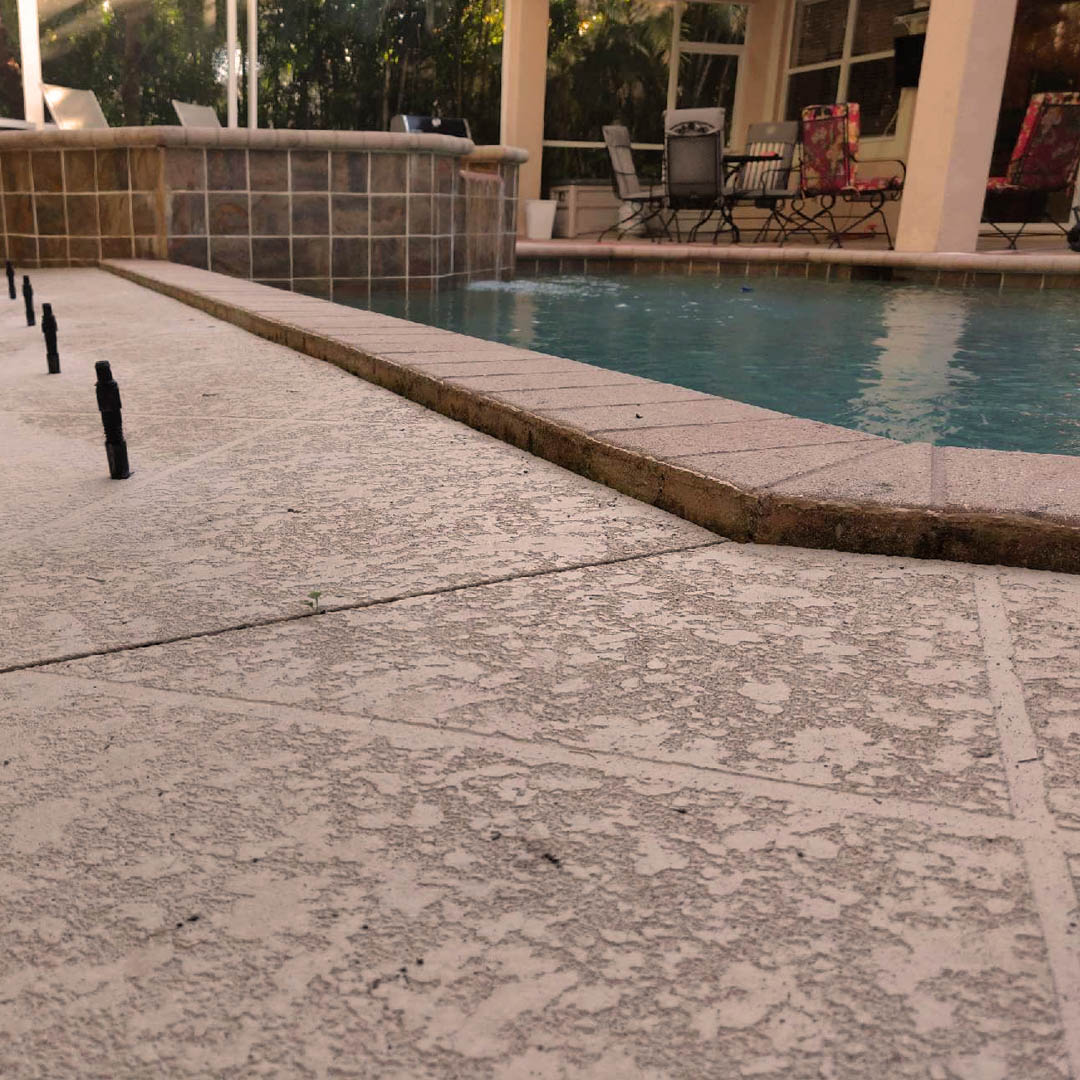
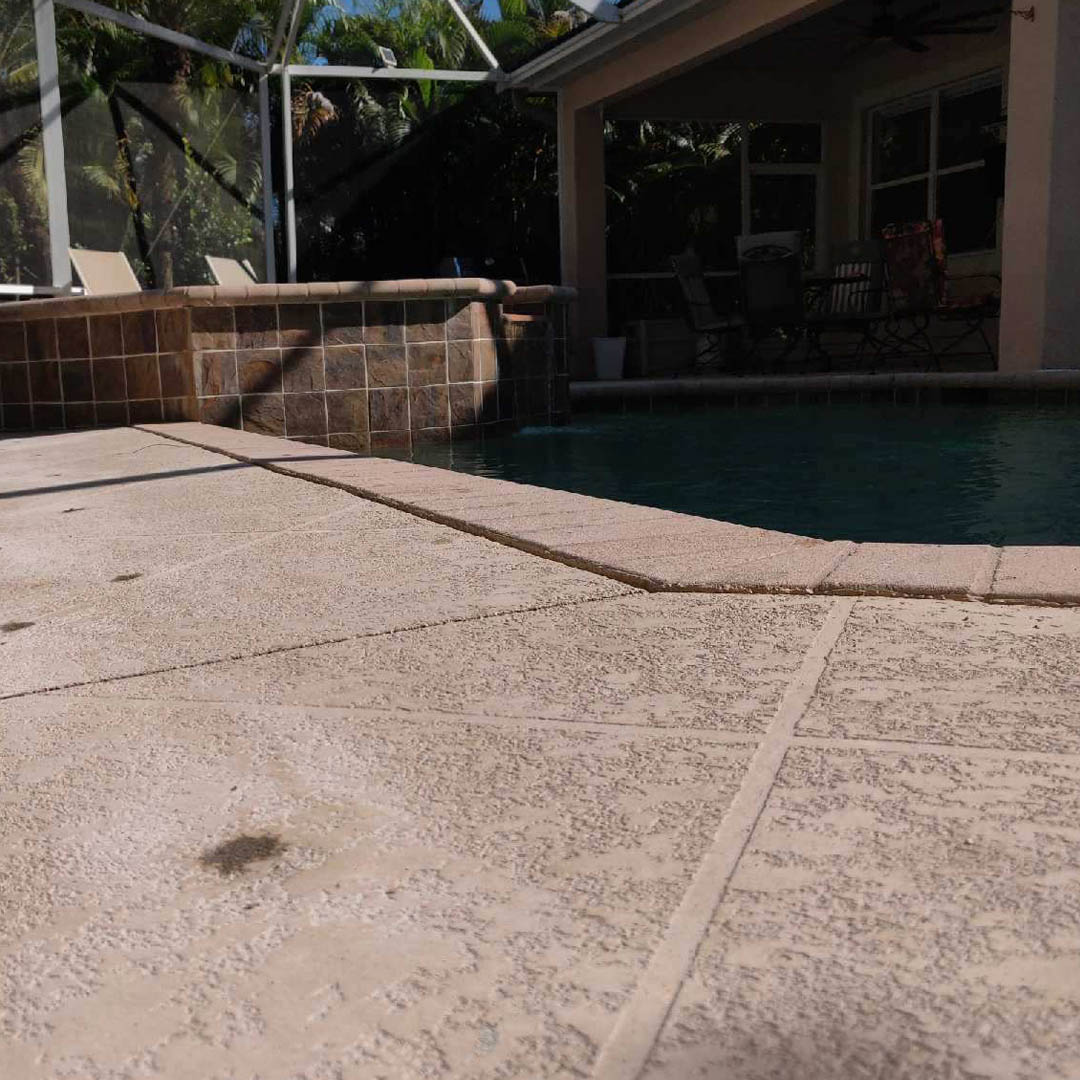
Before & Afters



Schedule a Free Estimate
WHERE WE SERVE Providing Expert Concrete Leveling Services Across Florida and Beyond
Expert Concrete Lifting in Florida
We proudly provide professional concrete leveling & repair services throughout Florida. Whether you’ve got a sinking driveway or void under your concrete, our team is here to help with all your concrete needs.

Concrete Raising in Georgia
From residential to commercial concrete lifting, our expert services are available across Georgia. We’re dedicated to restoring and leveling your concrete surfaces with precision and care.

Trusted Concrete Leveling in Texas
We bring top-notch concrete leveling services to communities all over Texas. Our experienced team is ready to tackle projects of any size to keep your concrete safe and stable.

Trusted Concrete Leveling in Tennessee
We now serve Tennessee with fast, reliable concrete leveling. Whether it’s a sunken driveway, uneven sidewalk, or settling patio, our team lifts it right the first time.

Trusted Concrete Leveling in Alabama
We now serve Alabama with fast, reliable concrete leveling. From driveways and sidewalks to patios and pool decks, our team lifts it right the first time.