What Causes Voids Under Concrete and Why Do Slabs Sink?
Why Voids Form | Warning Signs | Why Concrete Sinks | Polyurethane Lifting | Preventing Future Problems
A sinking driveway, sidewalk, patio, or pool deck may look like a concrete problem, but the real trouble is often hidden underneath.
Concrete slabs depend on the ground below them for support. When soil settles, washes away, shrinks, or shifts, empty spaces can develop beneath the slab. These spaces are commonly called soil voids. Once a slab loses support, its own weight and everyday traffic can cause it to sink, tilt, or crack.
At Poly Lift USA, we repair settled concrete by addressing what is happening below the surface. Understanding why soil voids form can help homeowners recognize problems earlier and determine whether concrete lifting may be an alternative to replacement.
Key Takeaways
Sinking concrete is often caused by lost support underneath the slab. Soil erosion, settlement, moisture changes, and poor compaction can all create empty spaces beneath concrete.
Voids can grow if the underlying problem continues. Water can enter gaps around a settled slab, wash away additional soil, and contribute to further movement.
Polyurethane concrete lifting fills voids while raising settled slabs. This allows many driveways, sidewalks, patios, and other concrete surfaces to be repaired without complete replacement.
What Is a Void Under Concrete?
A void is an unsupported space between a concrete slab and the soil or base material underneath it.
Concrete is designed to distribute its weight across a properly prepared and compacted base. When part of that base disappears or settles lower, the slab no longer has consistent support.
Imagine a driveway slab that is fully supported on one side but has an empty pocket beneath the other. The unsupported section must carry weight differently than it was designed to. Vehicles, foot traffic, weather, and the weight of the concrete itself can eventually cause that section to move downward.
The visible sinking happens above ground, but the underlying problem is often below it.
Why Do Voids Form Under Concrete?
There isn’t one single cause of concrete settlement. Soil conditions, construction methods, drainage, and weather can all play a role.
In many cases, several factors work together over time.
Water Can Wash Soil Away
Water is one of the biggest contributors to soil loss beneath concrete.
Rainwater can travel through open joints, cracks, and gaps along the edges of a driveway or sidewalk. Poor grading, overflowing gutters, leaking irrigation systems, or downspouts discharging near concrete can introduce even more water.
As water moves underneath the slab, it can carry small soil particles with it. Over time, enough material may wash away to leave an unsupported space.
Once the concrete begins settling, new gaps can open and allow even more water underneath.
Clay Soil Expands and Shrinks
Soil does not stay exactly the same throughout the year.
Clay-rich soils are particularly sensitive to moisture. They can expand as they absorb water and shrink as they dry.
During extended dry periods, shrinking soil may pull away from the bottom of a concrete slab. When moisture returns, the soil may not expand uniformly into its previous position.
Repeated wet and dry cycles can contribute to uneven support and gradual concrete settlement.
Buried Organic Material Can Break Down
Sometimes construction debris or organic material is left beneath or near an area where concrete is later installed.
Tree roots, stumps, wood, and other organic materials eventually decompose. As that material disappears, it occupies less space.
The surrounding soil can settle into the newly created area, potentially leaving the concrete above without adequate support.
Poorly Compacted Soil Can Settle
Concrete needs a stable base.
During construction, soil may be disturbed when an area is excavated and then filled back in. If the soil or base material underneath the concrete isn’t compacted adequately, small spaces can remain between particles.
Those spaces can gradually compress under the weight of the concrete and everyday traffic.
The soil moves downward, but the rigid concrete may temporarily remain at its original height. This can leave a void between the slab and the supporting material below. Eventually, the concrete may settle into that space.
Heavy Rain Can Change the Soil Below a Slab
One major storm usually isn’t enough to make a properly supported driveway suddenly sink. However, repeated heavy rainfall can change conditions underneath concrete.
Water may soften supporting soil, carry loose material away, or follow existing channels beneath the slab.
This is one reason homeowners sometimes notice sinking concrete after periods of unusually heavy rainfall. The problem may have been developing below the surface long before the slab visibly moved.
The Original Base May Not Have Been Prepared Properly
Good concrete starts below the concrete itself.
A properly prepared base helps distribute weight and provides consistent support. If concrete is installed over loose soil or poorly prepared fill, settlement problems may begin years later.
The concrete may initially look perfectly normal. As the material underneath compresses, however, individual sections can begin to sink.
What Happens After a Void Develops?
A small unsupported area can gradually become a larger problem.
Once a slab begins to move, gaps may develop around its edges or between adjacent concrete sections. These openings provide additional paths for rainwater.
More water underneath the concrete can contribute to additional soil erosion. The unsupported area gets larger, the slab settles farther, and new openings may appear.
A typical progression can look like this:
Soil loses support → a void develops → concrete begins settling → gaps open → more water gets underneath → additional soil washes away → settlement becomes more noticeable.
This is why addressing sinking concrete early can be helpful. Waiting until a slab has dropped significantly may allow the underlying problem to become more extensive.
Warning Signs of Voids Beneath Concrete
You don’t have to see underneath your driveway to recognize possible signs of lost support.
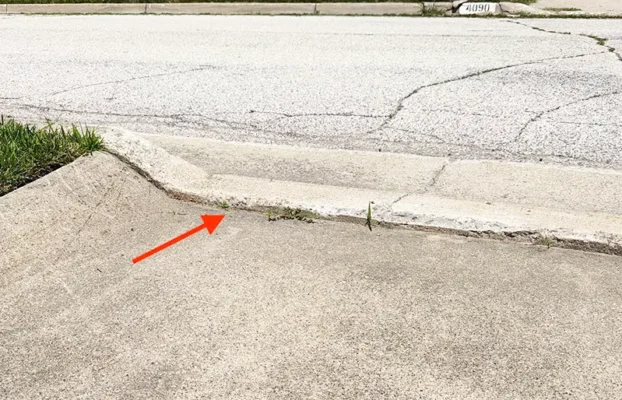
One of the most obvious signs is an uneven joint where one slab sits lower than the slab next to it. You may notice this on sidewalks, driveways, patios, pool decks, or concrete leading to front steps.
Other warning signs include:
- Concrete slabs that have visibly dropped
- Trip hazards between neighboring sections
- Cracks that develop or continue widening
- Gaps along the side of a slab
- Separation between a driveway and garage
- Water pooling in areas that previously drained
- Water flowing toward the home
- Soil washing out from underneath slab edges
- Concrete that appears unsupported along an exposed edge
These symptoms don’t automatically confirm the size or location of a void, but they can indicate that the concrete is no longer receiving consistent support underneath.
Why Drainage Matters Around Concrete
Water management is closely connected to concrete settlement.
A driveway or walkway should generally move water away from the home and other structures. When a slab sinks, its original pitch can change.
That can create a second problem.
Now the settled concrete may direct water toward the low area. That water can potentially find its way underneath the slab and contribute to additional erosion.
For example, a driveway that once pitched away from a garage may settle near the garage entrance. Rainwater can then collect in the low section instead of draining away properly.
Lifting the concrete may help restore a better elevation and improve drainage, depending on the surrounding conditions and available elevations.
How Polyurethane Concrete Lifting Fills Voids
Polyurethane concrete lifting addresses both the visible settlement and the unsupported space underneath the slab.
The process begins by drilling small injection holes through the concrete at carefully selected locations.
Polyurethane material is then injected beneath the slab. The material expands, moving into voids and unsupported areas below the concrete.
Once sufficient support has been established, controlled expansion can gradually raise the settled slab toward the desired elevation.
The process can be used for many types of concrete, including:
- Driveways
- Sidewalks and walkways
- Patios
- Pool decks
- Garage approaches
- Porches and stoops
- Concrete steps
- Commercial sidewalks
- Warehouse and concrete floors
The exact amount a slab can be lifted depends on its condition and surrounding elevations.
Why Filling the Void Is So Important
The most noticeable part of concrete lifting is seeing a sunken slab move upward.
But lifting is only part of the repair.
Restoring support underneath the slab is equally important. If concrete is raised without adequately supporting the space below it, unsupported areas may remain.
Polyurethane foam expands beneath the concrete, allowing it to reach irregular spaces and fill voids while adding relatively little additional weight to the underlying soil.
Once the concrete has adequate support again, loads from vehicles, people, and the slab itself can be distributed more effectively across the repaired area.
Why Polyurethane Foam Is Useful for Concrete Lifting
Polyurethane lifting offers several advantages when repairing settled concrete.
The injection holes are relatively small, which helps minimize visible disruption to the existing slab. The expanding material can also travel into irregular voids underneath concrete.
Another advantage is weight. Polyurethane foam is lightweight compared with many traditional fill materials, so the repair doesn’t place a large amount of additional weight on soil that may already have settlement issues.
The material also cures quickly. For many residential concrete lifting projects, the repaired surface can return to normal use shortly after the work is completed.
Can You Just Replace the Sunken Concrete?
Replacement is sometimes necessary, particularly when concrete is severely cracked, deteriorated, or structurally damaged.
But replacing a slab isn’t automatically the best solution simply because it has settled.
If the concrete itself remains in good condition, lifting may allow the existing slab to be preserved.
The underlying support also matters. Removing old concrete and pouring new concrete without properly addressing unstable soil or drainage conditions can leave the new slab exposed to similar settlement problems.
That’s why determining why the concrete sank is an important part of deciding how to repair it.
How Homeowners Can Help Prevent Future Voids
You can’t control every change in the soil, but you can reduce some of the conditions that contribute to erosion and settlement.
Start by paying attention to water around your concrete.
Make sure downspouts discharge away from driveways, sidewalks, patios, and the foundation. Keep gutters clear so rainwater doesn’t overflow beside concrete slabs.
Check landscaping and grading as well. Soil should generally encourage water to move away from the home rather than toward it.
Cracks and open joints should also be addressed. Sealing these openings can reduce the amount of surface water that reaches the soil underneath.
Finally, inspect irrigation systems for leaks or sprinkler heads that continually saturate soil along concrete edges.
Small drainage improvements can make a meaningful difference in protecting the support beneath your concrete.
Frequently Asked Questions About Soil Voids
Sinking Concrete? Look Below the Surface
When a driveway, sidewalk, patio, or other concrete slab starts sinking, replacing the concrete isn’t always the first answer.
The problem may be the missing support underneath it.
Poly Lift USA uses polyurethane concrete lifting to fill voids, stabilize settled slabs, and carefully raise concrete toward its proper elevation. By addressing what is happening beneath the slab, many homeowners can preserve their existing concrete rather than tearing it out.
If you’ve noticed sinking concrete, uneven slabs, trip hazards, poor drainage, or gaps underneath your concrete, contact Poly Lift USA for a free estimate. We’ll evaluate the settled area and determine whether polyurethane concrete lifting is an appropriate repair option.
WHERE WE SERVE Providing Expert Concrete Leveling Services Across Florida and Beyond
Expert Concrete Lifting in Florida
We proudly provide professional concrete leveling & repair services throughout Florida. Whether you’ve got a sinking driveway or void under your concrete, our team is here to help with all your concrete needs.

Concrete Raising in Georgia
From residential to commercial concrete lifting, our expert services are available across Georgia. We’re dedicated to restoring and leveling your concrete surfaces with precision and care.

Trusted Concrete Leveling in Texas
We bring top-notch concrete leveling services to communities all over Texas. Our experienced team is ready to tackle projects of any size to keep your concrete safe and stable.

Trusted Concrete Leveling in Tennessee
We now serve Tennessee with fast, reliable concrete leveling. Whether it’s a sunken driveway, uneven sidewalk, or settling patio, our team lifts it right the first time.

Trusted Concrete Leveling in Alabama
We now serve Alabama with fast, reliable concrete leveling. From driveways and sidewalks to patios and pool decks, our team lifts it right the first time.