
Seawall Repair in Miami, FL
Seawall sealing and void filling for homes on Biscayne Bay, the Miami River and Miami-Dade’s canals.
- 10-year warranty
- BBB A+ rated
- No deposits
- We don’t subcontract
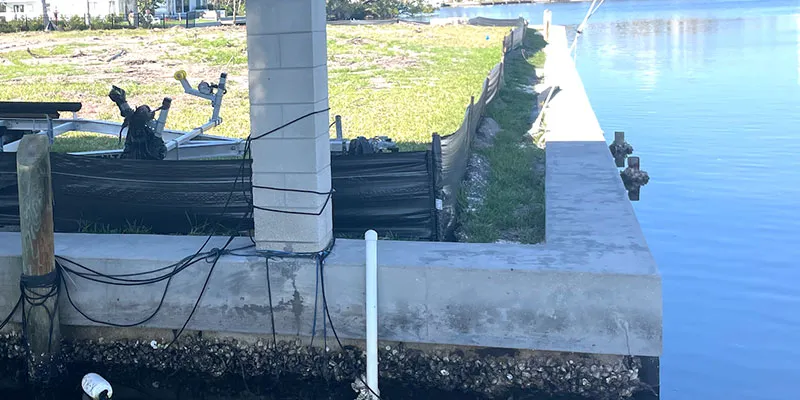
Miami’s seawalls have a harder job than most. Water doesn’t just push against the face of the wall. In much of Miami-Dade, it also comes up through the ground behind it. When a wall leaks, that water carries soil out with it, and the yard, patio or pool deck on the land side starts to sink.
Poly Lift USA seals leaking seawalls and fills the voids behind them with polyurethane foam. For many walls that’s enough to stop the soil loss without a full replacement.
Schedule a Free Estimate


Why Miami seawalls leak from below
Porous limestone under the bay and the yard
The Biscayne aquifer is a highly permeable limestone aquifer, and it extends beneath Biscayne Bay. The U.S. Geological Survey describes its connection to the canals as direct (USGS). In plain terms, the water in the bay, the canals and the ground under your yard are all connected through rock full of holes.
Miami-Dade County staff put it this way: because of the porous local geology, high tides are increasing groundwater levels (Miami-Dade County). A wall can stop water at the surface, but some water still moves under and around it. Each time it rises and drains, it can pull fine sand out from behind the wall.
King tides and a higher sea
In southeast Florida, the highest king tides usually come in the fall, and the county says sea level rise is making them happen more often, last longer and reach further inland (Miami-Dade County). A 2020 City of Miami presentation noted that sea level at the Virginia Key gauge had risen 5.7 inches since 1994 (City of Miami presentation).
Two tides a day, and salt
At NOAA’s Virginia Key station, the great diurnal tide range is about 2.24 feet (NOAA 8723214). That water rises and falls against your wall twice a day, and the salt in it rusts the steel inside concrete caps and panels. As rust expands, it cracks the concrete and opens new paths for soil to escape.
Who’s responsible, and the permits involved
Property owners. A seawall on private property is generally the owner’s to maintain. Miami Beach goes further: its seawall rules require private owners to fix failing walls that cause flooding, with up to 730 days to comply and fines of $250 to $500 a day after that, and they set a minimum height of 5.7 feet NAVD for new seawalls (City of Miami Beach).
HOAs and condo associations. In many communities the association owns the wall. Check your documents before scheduling work.
Miami-Dade permits. Miami-Dade County requires a Class I permit for work in, on, over or upon tidal waters. Repairs or replacements can go no more than 18 inches waterward, and some work, like crack sealing and spall repair on a seawall cap or face, is exempt (Miami-Dade Class I permit package). Your city may have its own building permit and elevation rules too, so we confirm what applies before we start.
See how foam seals a leaking seawall
How we seal a leaking seawall and fill the voids behind it with foam, the same repair we do for Miami homeowners.
How we fix it
- Find the leaks. We check joints, cracks, weep holes and the ground behind the cap.
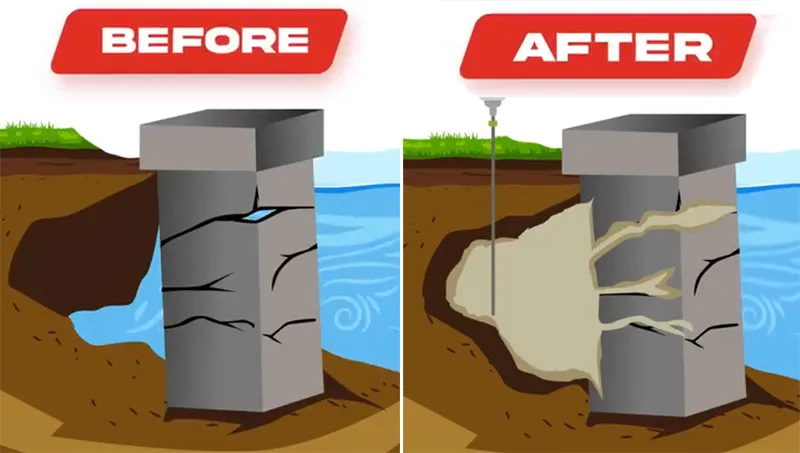
- Seal from behind. Foam injected behind the wall closes the paths water uses to carry soil out.
- Fill the voids. The foam expands into hollow spaces and supports the soil again.
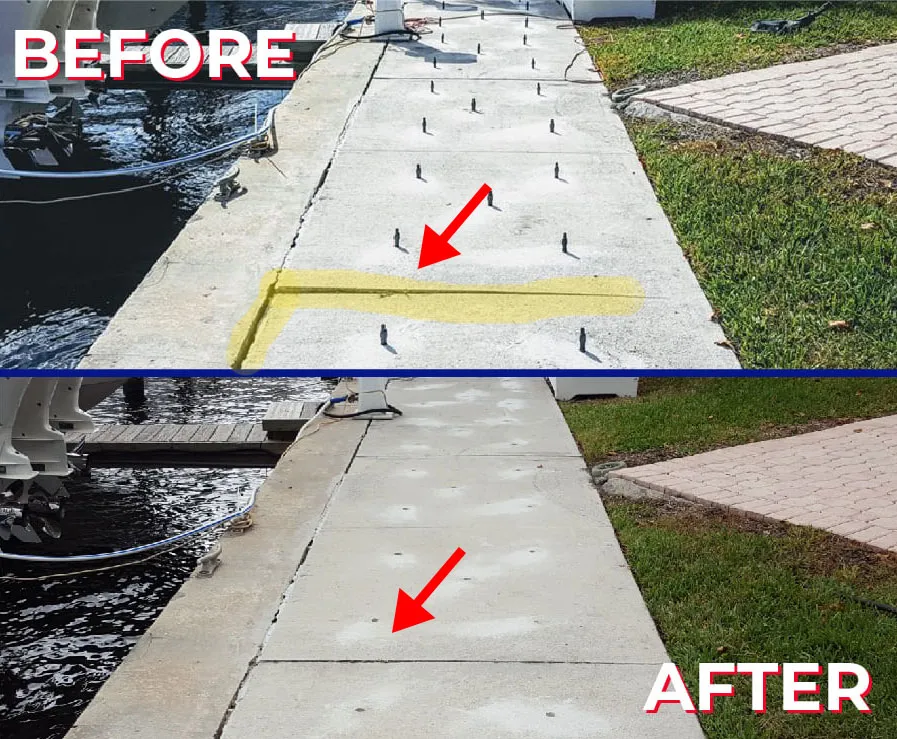
- Lift slabs that dropped. Patios, walks and pool decks behind the wall can be lifted at the same visit.
Common seawall problems we fix in Miami
Here are the problems we’re called for most often around Miami.
- Sinking ground behind the cap after king tides. Water came up through the yard and drained back out through the wall, leaving soft or hollow spots.
- Pool decks and patios tipping toward the water. Slabs near the wall lost support as soil washed out underneath.
- Older walls with open joints. The panels still stand, but sand leaves through the seams with every tide.
What South Florida customers say
★★★★★
“Thank you April for scheduling the work needed on our sea wall. The crew, Matt & Jake arrived promptly and performed necessary repairs. Poly Lift lives up to its warranty guarantee and is truly a Five Star operation. …”
Paul H. · Fort Pierce · Google review
★★★★★
“These guys did a great job on my pool deck. They made all of the concrete cracks level again. They also corrected a huge void under the corner of the house that’s been an issue for 33 years. Thanks.”
Drew H. · Davie · Google review
★★★★★
“I would definitely recommend Poly lift. It was seamless from the estimate on through the completion of the job. Very knowledgeable and professional.”
A.B. · Davie · Google review
Miami seawall repair FAQs
Why does my Miami seawall leak even though it isn’t cracked?
Much of Miami sits on porous limestone that connects the bay to the ground under your yard. Water can move under and around a wall and through small gaps at joints and weep holes, carrying sand out each time the tide drops.
Do king tides damage seawalls?
They add stress. King tides push water higher against the wall and raise groundwater behind it. As that water drains back out, it can pull soil through any gap in the wall.
Do I need a permit to repair a seawall in Miami-Dade?
Miami-Dade requires a Class I permit for work in or over tidal waters. Some repairs, like crack sealing and spall repair on a seawall cap or face, are exempt. Your city may have additional rules.
Can foam repair a seawall instead of replacing it?
When the wall is still structurally sound, foam can seal leaks and fill the voids behind it. If a wall is failing or too low for local rules, it may need more, and we’ll say so.
Is the HOA or the homeowner responsible for the seawall?
It depends on your community. Many associations own and maintain shared walls; otherwise the property owner does. Check your HOA or condo documents.


Schedule a Free Estimate
Nearby seawall service areas
- Hallandale Beach seawall repair: just north over the Broward line.
- Dania Beach seawall repair: farther up the coast.
- Key Largo seawall repair: down in the Keys.
- Miami concrete lifting: driveways, walks and pool decks.

